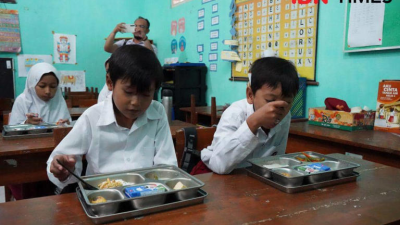


Aspirasimediarakyat.com – The national flagship program “Free Nutritious Meals” (Makan Bergizi Gratis/MBG), once touted as a breakthrough to tackle child malnutrition, is now engulfed in scandal. Critics warn that what should have been a lifeline for schoolchildren has been hijacked by “suit-clad plunderers,” leaving behind a trail of food poisoning, systemic negligence, and shattered public trust.
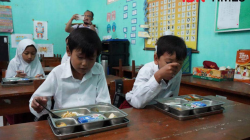
The National Nutrition Agency (BGN) has confirmed that from January to September 2025, 70 cases of mass poisoning were recorded across Indonesia, involving 5,914 victims. These victims included schoolchildren and pregnant women—the very groups the program was designed to protect.

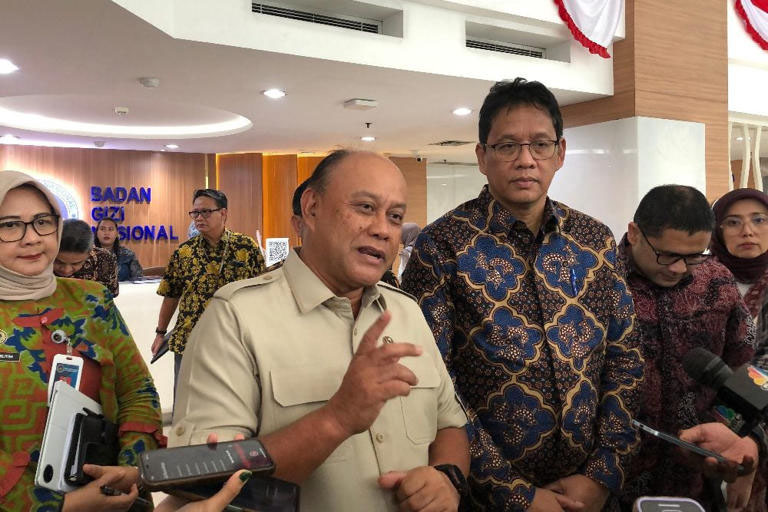
BGN head Dadan Hindayana acknowledged that the majority of incidents were linked to inexperienced kitchen staff working at newly established Nutrition Fulfillment Service Units (SPPG). “Data shows that most cases occurred at SPPGs that had only recently begun operations, where human resources lacked adequate training and flight hours,” Dadan stated in a written press release on Sunday (28/9/2025).
According to BGN’s records, 2,391 SPPGs were operational between January and July 2025, during which 24 mass poisoning incidents were reported. By contrast, an additional 7,244 SPPGs were launched between August and September, with 47 more incidents recorded. In total, 9,615 service units are now in operation, serving over 31 million beneficiaries nationwide.
Beyond staff inexperience, Dadan revealed deeper structural issues: poor-quality raw materials, unsafe water supplies, and repeated violations of standard operating procedures (SOPs). Together, these factors created what he described as a “dangerous chain” of risks leading to mass poisoning.
“The BGN’s findings have drawn sharp criticism from economists and legal analysts. Nailul Huda, Director of the Digital Economy at the Center of Economic and Law Studies (Celios), demanded that the MBG program be halted entirely for evaluation. “With the scale of poisoning cases growing, I must say the program needs a total stop to allow for comprehensive audit and review,” Huda told reporters.”
Huda further argued that evaluation should cover the entire production chain—from procurement of raw ingredients, cooking, and storage, to distribution, serving, and cleaning. “Many cases stem from errors across the supply chain, from upstream to downstream. Standards must be reset with zero tolerance for food safety breaches,” he insisted.
Meanwhile, President Prabowo Subianto has personally weighed in, calling the mass poisonings a matter of national urgency. Returning from a week-long overseas tour, the President pledged to summon the BGN chief and related officials for a closed-door meeting. “This is a big issue [providing MBG across Indonesia]. Of course, there will be shortcomings in the beginning. But I am confident we can fix this properly,” Prabowo told journalists at Halim Airport on Saturday (27/9/2025).
Prabowo also warned against politicizing the crisis, emphasizing that the core purpose of the program remains noble: ensuring that disadvantaged children have access to at least one nutritious meal daily. “Some children survive on just rice and salt. That is what we must overcome—to provide them with healthier food. There will be obstacles, but we will face them,” he said.
The Indonesian National Police (Polri) has likewise stepped in. National Police Chief General Listyo Sigit Prabowo confirmed that his force is investigating the incidents across multiple regions. “Polri has deployed personnel to examine these cases one by one. Handling will be transparent so the public can monitor,” Sigit stated during a spiritual strengthening event at Police Headquarters, Jakarta, Friday (26/9/2025).
“Yet, behind the official statements, critics argue that the situation reflects a more sinister pattern—a system hijacked by “leeches of the people’s blood.” While the program’s stated mission is to nourish the poor, insiders suggest that mismanagement, profiteering, and weak oversight have turned public nutrition funds into a feeding ground for corruption.”
The scale of the crisis is stark. BGN data shows a geographic spread of 70 poisoning cases: 41 in Java affecting 3,610 people, 9 in Sumatra with 1,307 victims, and 20 across NTB, NTT, Sulawesi, Kalimantan, and Papua involving 997 victims. The trend has worsened over time—from just 94 victims in January (4 cases), to 1,988 in August (9 cases), and a staggering 2,210 in September (44 cases).
The five worst-hit regions were Bandar Lampung (503 victims), Lebong, Bengkulu (467), Bandung Barat (411), Banggai Islands, Central Sulawesi (339), and Kulon Progo, Yogyakarta (305). Such numbers expose the fragility of food safety supervision across districts.
BGN’s forensic analysis further traced poisoning sources to bacterial contamination: E. Coli from water, rice, tofu, and chicken; Staphylococcus aureus from tempeh and meatballs; Salmonella from chicken, eggs, and vegetables; and Bacillus cereus from noodles. Contaminated water supplies also spread Coliform, Klebsiella, Proteus, and even traces of lead (Pb).
Health law experts argue that the scandal may involve violations of multiple statutes: the Food Law (Law No. 18/2012), the Consumer Protection Law (Law No. 8/1999), and even the Anti-Corruption Law (Law No. 31/1999 jo. Law No. 20/2001) if procurement fraud is proven. The State Audit Board (BPK) has been urged to examine whether MBG funds were misused in the selection of SPPGs and private partners.
Civil society groups have warned that the credibility of the entire MBG program is now on the line. Without reforms, they argue, the initiative risks collapsing under the weight of distrust, depriving millions of children and mothers of vital nutritional support.
Public anger has been palpable, with small demonstrations emerging in several provinces. “We have the right to know where the state’s nutrition money goes,” said one village elder in Bengkulu. “If funds for children’s meals are stolen, that is stealing from the nation’s future.”
At the heart of the debate lies accountability. Was the crisis merely the result of technical errors and inexperience, or does it reflect systemic misconduct deliberately left unchecked? Observers note that the answer will determine whether reforms are sufficient—or whether criminal prosecutions are inevitable.
As the scandal unfolds, the closing note is bitter. For many citizens, the MBG program now resembles less a symbol of social care and more the playground of “grand thieves” in polished uniforms, cloaked in respectability yet fattening themselves while children fall ill.