

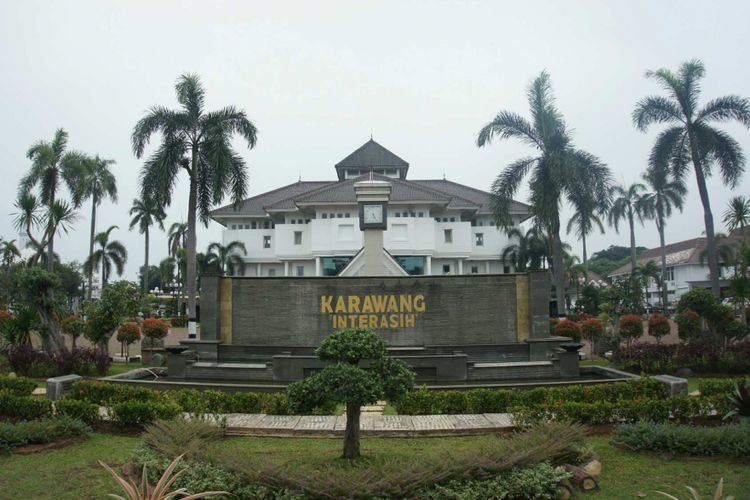

Aspirasimediarakyat.com — The specter of mismanagement once again haunts the corridors of local government. Public assets in Karawang Regency worth more than IDR 583.6 billion (around USD 37 million) have been reported to be severely damaged, a staggering figure that observers warn could be the handiwork of “collared thieves”—tie-wearing plunderers feeding on state resources while ordinary citizens are left grappling with decaying facilities.
The number, precisely recorded at IDR 583,653,209,262.34, was disclosed in a recent inventory report examining government property. The findings revealed that numerous assets, ranging from infrastructure to public facilities and equipment, have deteriorated into conditions far below expected standards.

The report has drawn sharp reactions from academics, civil society organizations, and policy observers. Many argue that the sheer magnitude of the damaged assets demands immediate scrutiny from both auditors and law enforcement agencies.
“A public policy observer emphasized that the question goes beyond mere figures. “This isn’t just about damaged buildings or broken infrastructure. It’s about whether taxpayers’ money has been systematically neglected, mismanaged, or siphoned off under the guise of development,” the observer noted.”
So far, the Karawang Regency Government has yet to issue an official response to the revelations. The silence has only fueled public speculation about the possible causes and accountability behind the massive losses.
Under Indonesian law, particularly Law No. 1/2004 on State Treasury and Government Regulation No. 27/2014 on State/Regional Asset Management, local governments are obliged to manage public assets efficiently, transparently, and responsibly. Failure to comply could open the door to legal consequences, ranging from administrative sanctions to criminal prosecution.
Legal experts highlight that the figure—over half a trillion rupiah—cannot be dismissed as routine wear and tear. “If the damage results from negligence, it signals systemic flaws in planning and maintenance. But if it stems from deliberate misuse or corruption, then it falls under the jurisdiction of anti-graft agencies such as the KPK,” explained one legal analyst.
The Karawang case has also put the spotlight on asset management practices in regional governments across Indonesia. The Supreme Audit Agency (BPK) has repeatedly flagged weaknesses in how local administrations record, maintain, and safeguard their assets. In many cases, assets are poorly documented, leaving room for manipulation or disappearance.
“Transparency advocates insist that such loopholes must be addressed urgently. They argue that the Karawang incident is not an isolated one, but part of a broader pattern where weak governance allows public resources to rot—sometimes literally—before citizens’ eyes.”
For residents of Karawang, the issue is more than just numbers in an audit. Damaged schools, broken health facilities, and deteriorating infrastructure have direct consequences on their quality of life. Parents, for example, have voiced frustration over crumbling classrooms that jeopardize their children’s safety.
At the same time, budget allocations for maintenance have consistently been included in regional expenditure plans. This raises a fundamental question: if funds are regularly disbursed, why have the assets reached such a catastrophic level of damage? Here lies the contrast that enrages many citizens. It is in this murky gap between budget and outcome where “leeches sucking the people’s blood” are most often suspected.
The Karawang case could soon become a litmus test for the government’s seriousness in enforcing asset management laws. Experts urge the Inspectorate General, BPK, and possibly the KPK to collaborate in conducting a forensic audit.
Civil society organizations are calling for open hearings at the local parliament (DPRD) level to press the executive branch of the regency government for answers. They argue that democratic accountability demands not just closed-door audits, but also transparency in how findings are communicated to the public.
The Ministry of Home Affairs, which oversees local governance, has yet to issue a directive in response to the report. However, under Law No. 23/2014 on Regional Government, the ministry has supervisory authority and can recommend corrective measures, including sanctions on negligent officials.
Observers warn that without decisive follow-up, the Karawang case risks being buried under bureaucracy. “We’ve seen this before: damning reports surface, headlines erupt, but within months the noise dies down while the problems remain,” a governance watchdog told reporters.
For now, the people of Karawang are left waiting. They demand more than promises; they want action that prevents their tax money from evaporating into the abyss of inefficiency or corruption.
As pressure mounts, the regency government faces a crucial choice: confront the issue head-on through transparent investigations, or allow suspicion and public anger to fester.
In the end, the damaged assets are more than just physical structures—they are symbols of trust betrayed. If left unanswered, they may become monuments to the greed of “big-time thieves” hiding behind public office, while citizens are forced to live amid ruins.