



Aspirasimediarakyat.com — Online gambling once again reveals its ugly face as a parasite draining the lifeblood of the poor. Not only does it rob families of their last hope, it also tarnishes the integrity of social assistance programs meant to sustain those living at the very bottom. The latest case in Rawamerta District, Karawang Regency, shows how the poison of online gambling has ensnared hundreds of aid recipients, leading to their removal from beneficiary lists.
From a total of 4,681 households receiving benefits under the Family Hope Program (PKH) and the Non-Cash Food Assistance Program (BPNT), only 2,849 were successfully verified in accordance with the National Integrated Welfare Data (DTSEN). Yet this figure dropped further after verification uncovered irregularities, including the shocking involvement of aid recipients in online gambling.

The verification identified 258 problematic cases. Under the PKH scheme, 69 individuals were directly found to be engaging in online gambling, while in the BPNT program, 150 beneficiaries were strongly suspected of the same. In addition, 28 recipients were flagged due to data mismatches, four were identified as civil servants (ASN) who should not be on the list, and seven were confirmed deceased.
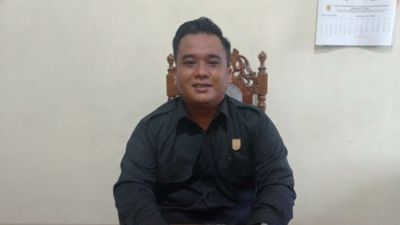
Rawamerta Acting Subdistrict Head, Angga Satria Atmaja, stated firmly that the government would not compromise in dealing with such findings.
“In PKH, 69 individuals, and in BPNT, 150 individuals suspected of involvement in online gambling have had their assistance status officially revoked,” Angga emphasized on September 30.
He added that the verification process is part of a broader effort to clean up the social assistance database and ensure that aid reaches only those who are genuinely entitled to it. “This is not only about administrative accuracy, but also about fairness. Social assistance must not be hijacked by those who misuse it,” he explained.
“The decision sparked mixed reactions in the community. Some residents welcomed the move as a firm stance against abuse, while others expressed concern that families could be left vulnerable if they lose access to aid, regardless of their actions.”
Observers noted that the Rawamerta case reflects a wider challenge faced by Indonesia in managing social assistance programs. While government efforts to digitalize and synchronize data have improved transparency, the persistence of fraudulent practices—particularly linked to gambling and misuse of funds—continues to undermine public trust.
Online gambling, often referred to locally as judol, has become a pervasive problem across regions. Its rapid spread, fueled by easy access through smartphones, has turned it into a silent predator consuming household finances and destabilizing communities. Experts warn that without stricter enforcement and digital surveillance, such cases may continue to multiply.
Legal experts point out that Indonesia’s laws are clear. According to Article 303 of the Criminal Code (KUHP), gambling is a criminal offense, and perpetrators can face imprisonment. Meanwhile, misuse of social assistance funds not only violates social welfare regulations but can also fall under anti-corruption provisions if state funds are proven to be misappropriated.
The Ministry of Social Affairs has previously stressed that social aid programs like PKH and BPNT are vital instruments to combat poverty. However, when recipients engage in activities like gambling, they not only betray the system but also reduce the effectiveness of these programs in lifting people out of hardship.
Community leaders in Rawamerta called for a balanced approach. While they supported the removal of offenders from aid lists, they also urged for education and rehabilitation to prevent families from falling deeper into crisis. “Cutting off assistance is one thing, but helping them break free from gambling addiction is equally important,” said one local elder.
Meanwhile, civil society organizations have demanded closer oversight from the Otoritas Jasa Keuangan (OJK) and the Ministry of Communication and Information Technology (Kominfo) to tighten the clampdown on online gambling platforms. They argue that as long as digital gambling sites remain accessible, vulnerable families will continue to be at risk.
The Karawang case is now being viewed as a wake-up call. It highlights not only the need for stricter monitoring of social assistance recipients but also the urgent necessity for a nationwide crackdown on online gambling networks that have infiltrated every layer of society.
At the heart of the issue, however, remains the suffering of ordinary people. Social aid was never meant to be gambled away, and when funds intended for basic needs are lost in virtual casinos, it is not just money that disappears—it is dignity, security, and the fragile hope of survival.
As the smoke clears from Rawamerta’s latest scandal, one thing stands firm: the government’s vow to protect the sanctity of social assistance programs. Yet, the real battle is far from over. Until online gambling rings are dismantled and strict enforcement reaches every corner, poor families will remain trapped between aid and addiction.
In the end, the tragedy of 219 families losing their aid due to online gambling is not just about numbers. It is a reminder that when vice replaces necessity, the weakest shoulders bear the heaviest burden. And in Karawang, the fight for dignity continues.(Sukarno)